

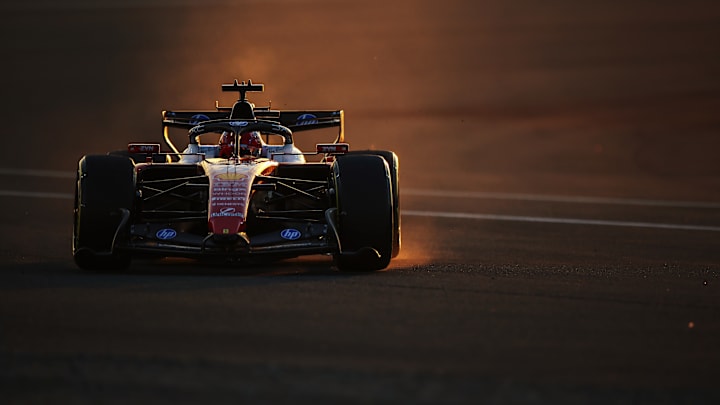
With a technical overhaul of regulations starting in the 2026 Formula 1 season, there are many new techniques and modes of action for drivers and teams to employ during a Grand Prix. The start procedure is quickly becoming a controversial topic as we near the first race of the season.
Under the new regulations, launching the car when the lights go out involves spooling the turbo. A driver should start the lag at least 10 seconds beforehand to minimize the lag for an ideal launch.
The drivers are finding this overly complicated compared to previous years and even foresee a potential safety issue. The odds of at least one driver botching a race start have grown exponentially, and yellow or red flags become the norm only damages the on-track product.
Ferrari would be negatively impacted the most
Team principal Fred Vasseur was quick to oppose the idea of changing start procedure rules as we inch closer to the first race of the season.
Ferrari had been swiftly denied when they brought this potential issue to the FIA one year ago. As a result, they innovatively created a power unit that minimizes the needed turbo lag at the start of a race.
And after a strong showing in testing, they've seen themselves emerge as one of the favorites to win the constructor world championship, with both Charles Leclerc and Lewis Hamilton moving up the board to win the driver world championship as well.
As things stand, their innovation gives them an advantage over other teams during the first lap, and it is clearly a smart interpretation of the rules. Changing the regulations just days before the season begins, simply because the other 10 teams did not come across this loophole, is simply unfair.
The situation draws similarities to the controversy surrounding Mercedes and their engine. Toto Wolff continues to insist that no rules were violated, and it seems that way given the fact that their compression ratio is still 16:1 under cold conditions.
It appears that the FIA did not do a great job at creating these regulations, given the issues, loopholes, and controversies that now surround teams taking their own creative approach to the rules. But as long as no rules were violated, teams should be able to keep their innovations.
At the end of the day, Formula 1 is not just a battle on the track, but also in the factory. Innovation is at the forefront, and teams should be applauded for it, not torn down for the sake of making the playing field more even. In this scenario, the regulations should be kept the same unless it becomes a serious safety issue in Melbourne.
 Add us as a preferred source on Google