

Seriously, does anybody still watch the Academy Awards?
For what it's worth, I tend to forget they exist (98th edition coming this March, by the way, for those who stopped counting after one or two) until the annual reminder we get roughly this time each year regarding some random nomination someone popular got for being popular.
This time around, some of those nominations happened to be motorsport-related.
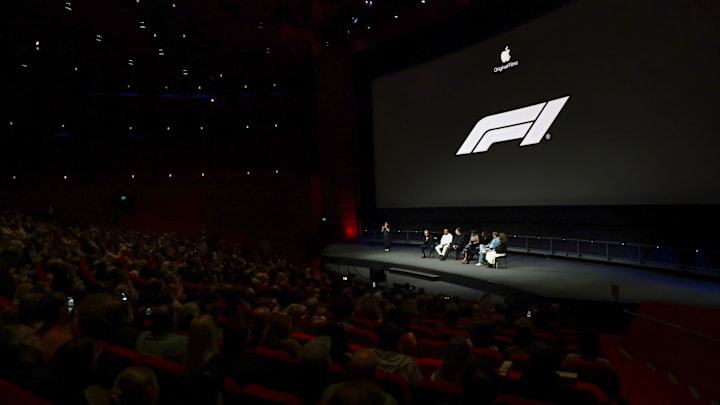
The F1 movie, which was released back in June 2025, was nominated for four separate Oscars: Best Picture, Best Visual Effects, Best Film Editing, and Best Sound.
We get it; it's not only subjective, but whether we like it or not, it pays to know people, and this was obviously a movie tied to all sorts of big names, and with a direct connection to a global sport that continues to skyrocket in popularity.
Aside from the fact that every time they showed Sonny Hayes (Brad Pitt) on the race track, it felt like the same rehashed bit of him finding something else stupid to pull off, or the fact that the ending of the movie was more predictable than the ending of Cars, it was a solid movie with a number of memorable moments.
I personally liked the line that "the best things in life usually arrive ninth", simply because I felt like it related directly to Penn State's recent football head coaching search. But I digress.
Back to the actual point. The fact that they incorporated real Formula 1 race footage into the plot, yet featuring the fictional APXGP team actually on the race track, was impressive, and the film does deserve recognition for pulling that off so seamlessly. Max Verstappen's genuine real-life "that was naughty" line fit perfectly.
And it was certainly no flop at the box office.
F1 movie recognized for everything Rush quietly got right
But the fact that Rush, a Formula 1 movie released in 2013 about the intense 1970s rivalry between Niki Lauda and James Hunt, with a focus on the 1976 season, was never nominated for any Oscars says all you need to know about how much this "awards" ceremony really matters.
Quite frankly, we're not sure why the F1 movie needed seven or eight times the budget that Rush did, but it is what it is.
Yet for Rush, what it was was apparently not good enough.
Without fully rehashing the details of a massive 2018 piece we re-published back in the summer of 2024 about what made Rush so great, suffice it to say that it is literally as good as it gets as far as portraying a true story without completely overdoing it.
The audience felt like they were watching one of the most iconic Formula 1 seasons unfold right in front of their eyes. It was a cinematic experience in which you could feel the tension and all the range of emotions from start to finish.
The F1 movie had bits and pieces of that, but nothing to the extent Rush did.
So many more liberties could have been taken in Rush to make it completely ridiculous just for sensationalist purposes, and it still would have been a stronger film than the F1 movie in that regard. The only thing the F1 movie has going for it in that respect is the fact that real race footage was used as part of the fictional story. Literally nothing else was realistic.
But we do want to be clear: the F1 movie was designed to target the same individuals the hit Netflix show Drive to Survive targeted. It was meant to grow the sport based on the sport being something that the sport, quite frankly, isn't.
And it served its purpose; nobody was expecting a true story based on a driver returning to the sport 30 years after stepping away and magically winning a race. Even Fernando Alonso hasn't done that (yet). So in some ways, it's an apples to oranges comparison, because it was a hit in terms of what it set out to achieve.
Yet if you really wanted, you could make a legitimate case that it was a glorified marketing ploy.
Sure, there were liberties taken in Rush as well, as there are in pretty much any movie based on a true story. But the late Lauda himself, a no nonsense character if ever there was one, acknowledged how impressed he was with the fact that the movie was "very accurate", noting that Ron Howard didn't rely on Hollywood-esque changes to the plot to captivate the audience.
That epic world championship battle from 50 years ago was done justice in the best way possible on so many levels. Yet it was completely ignored in the court of whatever public opinion seems to matter anymore.
If you want the honest truth, the real disconnect here is the fact that, back in 2013, Formula 1 wasn't "cool" in the same sense that it is now. At the end of the day, that's the only way to put it. Sure, it has always been an elitist sport, in a way, but Drive to Survive, in particular, has escalated that effect.
It's why fans would rather tune in to glorified parades on Sundays rather than watch racing that actually features parity, regular wheel-to-wheel action, overtaking, battling for position without seemingly endless complaining on the radio when another car enters one's mirrors.
It's why some Americans have even used Formula 1 as a status symbol to take cheap shots at other racing series they probably can't differentiate from NASCAR if you stuck them directly in a pit box.
But that's the kind of thing the Oscars tend to recognize, even from a broader perspective, so it's no surprise to see the squeaky wheel get the oil here too. Meanwhile, the real diamond is the one that, even more than 12 years later, continues to fly under the radar simply because it didn't generate an overblown obsession from countless big-name celebrities.
 Add us as a preferred source on Google