

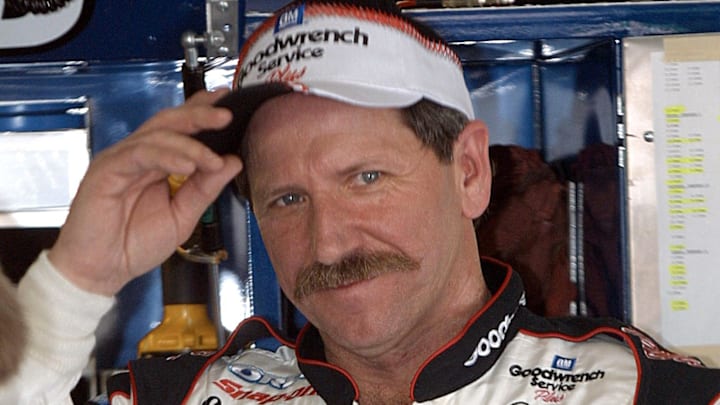
There are some people in the world who just feel too immortal to die.
For more than 20 years, Dale Earnhardt was one of those people. A giant. A superhero. A half-man, half-myth who made some of the world's toughest tough guys look like little boys. He was simply indestructible.
Earnhardt was the human embodiment of the essence of NASCAR racing, a sport he brought into national mainstream relevance. And on the final lap of the 2001 Daytona 500, a little bit of that essence died with him.
Dale Earnhardt gave NASCAR its identity, and remains its most defining icon
From the very beginning, NASCAR was an outlaw's sport, with blue-collar origins derived from moonshine runners driving tricked-out motor vehicles to escape the police. Cup Series competitors in the old days were pure self-made men, gearheads who fine-tuned their own equipment and operated on shoestring budgets. And every time they strapped on their helmets, they knew their life hung in the balance.
You had to be tough as nails to be a NASCAR driver, and Earnhardt was the toughest of them all. He was Teddy Roosevelt, Ernest Hemingway, and Burt Reynolds all rolled into one, a man's man's idea of a man's man. He was brash, unapologetic, and sometimes even a bit dirty. And he could do things behind the wheel of a race car that no one else could.
Throughout his legendary career, Earnhardt took the Cup Series' niche popularity and brought it to a whole new level. He made NASCAR cool, the same way Michael Jordan made the NBA cool and Joe Montana made the NFL cool. As races began to be more widely broadcasted on national television, kids grew up wanting to be like him. The image of his iconic black No. 3 was the same as his own: fierce, imposing, absolutely relentless. The Intimidator was born.
Earnhardt joined Richard Petty as the sport's only other seven-time champion at the time, after winning four out of five between 1990 and 1994. His win total of 76 is somewhat underwhelming for someone of his stature, but his Richard Childress Racing team often wasn't on the same level as powerhouses such as Hendrick Motorsports. His raw talent was as visibly awe-inspiring as any driver the sport had ever seen, a god amongst men.
In the late 1990s, as Earnhardt began to quietly fade into his twilight years, his next chapter started to come into focus. He owned a race team now. His son, Dale Jr., was a rising star. He might not have had much longer on the track, but his presence in the sport would always be there. He was going to be one of NASCAR's most powerful figures for as long as he lived.
And then he was gone. It didn't feel possible. But at the end of the day, he died as he lived. He was the ultimate NASCAR driver, a warrior of warriors, and he went out like a dignified hero succumbing to wounds from a battle that had already been won. His legacy was cemented, and his legend will live on forever.
NASCAR will never have another Dale Earnhardt. Perhaps fittingly, and also thankfully, he remains the most recent driver to have died during a Cup Series race. He will forever represent a throwback to a time in which stock car racing was only for the strongest of men, a true matter of life or death.
 Add us as a preferred source on Google