

There's no shortage of drivers throughout NASCAR history whose legacies have come with "What-if?"s.
If Davey Allison or Tim Richmond hadn't died while just entering their primes. If Ernie Irvan wasn't critically injured at the start of his. If Kevin Harvick or Kyle Larson had been on elite teams their whole careers. If Sterling Marlin was ever on one at all.
Yet NASCAR's greatest "What-if?" might be a guy who won 105 Cup Series races.
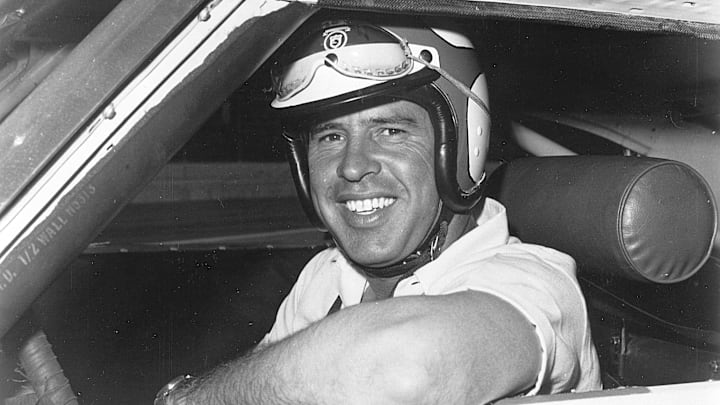
David Pearson built a legacy like few others, all while seldom running the full schedule
It's not at all to diminish "The King," but the biggest reason why Richard Petty won 200 races and seven championships during his career is because David Pearson wasn't always around to challenge him. When he was, the two of them were virtual equals, and the friendly competition of their rivalry brought NASCAR out of its infancy stage and into the Modern Era.
In 551 Cup Series events that Petty and Pearson competed against each other, the seven-time champ finished ahead 290 times. He won 108 of those races, while "The Silver Fox" won 97. For those keeping track, that's all but eight of Pearson's wins that came against Petty, but barely half of Petty's that came against Pearson.
Pearson's career winning percentage of 18.3% clears Petty's of 16.9%, again, while competing against his rival more often than vice versa. Of course, The King also raced for eight full seasons after his final career win, which significantly brought that number down.
Pearson never attempted the full Cup Series schedule in any season of his career, and he only attempted at least 75% of it four times. In those four seasons, he won 50 races and three championships (1966, 1968, and 1969).
If we extrapolated Pearson's win rate across the 1,008 possible starts he could have made between 1960 and 1985, his total number of victories would theoretically rise to 184. One would also have to assume that Petty likely loses at least 20 to 30 of his in this scenario.
At the end of the day, the only differentiator between the two titans is the fact that Petty maxed out what he could have accomplished, which is what ultimately puts him over the top. But the fact that the driver second on the all-time career wins list left so much more on the table speaks to how dominant Pearson was.
He was the greatest part-time driver in NASCAR history.
 Add us as a preferred source on Google