

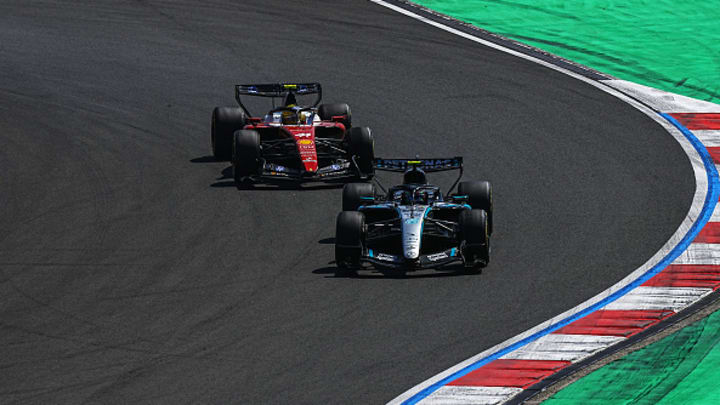
The statuses of both the Bahrain Grand Prix at Bahrain International Circuit and the Saudi Arabian Grand Prix at Jeddah Corniche Circuit have been in question for the past couple of weeks, given the ongoing political conflict in the Middle East.
With the safety of drivers, teams, and fans at the front of Formula 1's mind, it was always unlikely that either race, both scheduled for April, would take place.
The 2026 schedule initially featured 24 races, tying the record that was set in 2024 and tied in 2025, and for the past two weeks, there has been speculation regarding which races could potentially replace the Bahrain and Saudi Arabia races.
Now Formula 1 has officially confirmed the cancelation of both races, but there will be no replacement events.
Formula 1 has simply decided to take April off.
Formula 1 most recently called off a race without replacing it in 2023, when flooding resulted in the late cancelation of the Emilia Romagna Grand Prix at Imola Circuit. That cancelation resulted in the schedule dropping from 23 Grands Prix, which would have broken the all-time record set in 2021 and tied in 2022, to 22.
Imola, which is the one track on the 2025 calendar that was not included on the initial 2026 calendar, had been considered a possible replacement for Bahrain or Saudi Arabia this season, as had Portimao, which is scheduled to return to the calendar in 2027 for the first time in 2021.
But the World Endurance Championship was proactive in shifting its Qatar race weekend at Lusail International Circuit, which had been scheduled to take place on the final weekend in March, to Imola on Sunday, April 19. Formula 1 was initially supposed to race in Jeddah that weekend.
Replacing back-to-back races on back-to-back weekends proved too challenging for Formula 1, even with more than a month to make adjustments – and even with the option to potentially run two races at a single track, as they did at the Red Bull Ring in 2020 and 2021, or even two races on two different layouts at the same venue, as they did at Bahrain in 2020.
As a result, rather than tying the all-time Formula 1 record, this year's 22-race total is set to tie the lowest since the 2020 season, which was shortened to 17 races as a result of COVID-19-related restrictions.
The Japanese Grand Prix, which is the third race on the 2026 schedule, is scheduled to take place at Suzuka Circuit on Sunday, March 29, and it is now the final race on the schedule until the Miami Grand Prix at Miami International Autodrome on Sunday, May 3.
This five-week break is scheduled to last even longer than the planned four-week summer break, which is set to begin after the Hungarian Grand Prix at the Hungaroring on Sunday, July 26 and end with the Dutch Grand Prix at Circuit Zandvoort on Sunday, August 23.
All Formula 1 Grands Prix and associated qualifying sessions, practices, and sprints are set to be shown live on Apple TV this season.
 Add us as a preferred source on Google