

In its first 23 years of existence, the NASCAR Cup Series postseason field has never looked the exact same from one season to the next.
And even if for no other reason than the fact that two-time race winner Corey Heim is set to be a full-time driver for the first time next year, we don't expect the same 16 drivers from the 2026 "Chase" playoffs to be the same 16 drivers to qualify in 2027 either.
Which of 2026's qualifiers will struggle to be a part of that 16-driver field in 2027? Here are three who could face an uphill climb to get back.
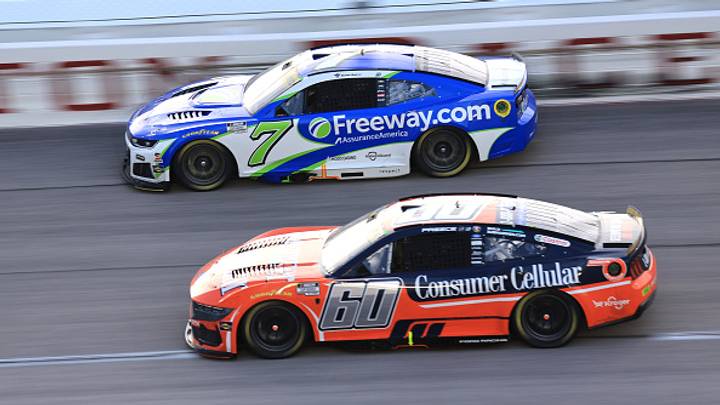
Ryan Preece, RFK Racing
Aside from a late-spring rough patch of three straight DNFs, Ryan Preece was the ultimate beneficiary of "consistency" mattering in terms of qualifying for the postseason. And no, it was not because he was consistently good.
By simply making a habit of finishing in the top 20, Preece positioned himself to make his first playoff appearance. Before he earned his first career win at Daytona International Speedway to wrap up the regular season, he hadn't finished a single race higher than eighth all year.
And when the playoffs rolled around, it was more of the same. The last driver into the playoffs didn't finish a single race higher than 10th, which does not inspire a ton of confidence heading into an offseason of change at RFK Racing, headlined by the departure of team co-owner Brad Keselowski. Yet he still ended the year with no DNFs since early June.
Preece's 2026 season is the ultimate example of why a 16-driver postseason field feels far too large. His 2027 season might well prove to be the ultimate example of why you can't consistently rely exclusively on avoiding disaster to be in the top 16 on points.
Chris Buescher, RFK Racing
If there were one driver who benefited from the removal of "win and in" and the return of a points-based qualifying format for the postseason, it was Chris Buescher, who was one of the sport's most consistent drivers across the 2024 and 2025 seasons, yet did not make it to the playoffs in either year simply because he lacked a regular season win.
He comfortably qualified for the 2026 playoffs with a top 10 finish in the regular season standings, which was to be expected after his performance in 2024 and 2025 as the top non-playoff driver. But once the playoffs rolled around, he struggled mightily.
He plummeted from 10th in points and finished the season 16th, last among all postseason drivers, and his 10th place finish at Charlotte Motor Speedway was his one and only top 10 finish of any kind since mid-July.
As is the case with Preece, it remains to be seen how the changes at RFK Racing will affect Buescher. For what it's worth, he did not qualify for the playoffs in 2020 or 2021, when the team was still Roush Fenway Racing. He then won five races from 2022 to 2024, in the team's first three seasons with Keselowski as a co-owner.
Daniel Suarez, Spire Motorsports
Like Buescher, Daniel Suarez made it to the 2026 playoffs relatively comfortably, finishing the regular season 11th in the point standings.
But he's never qualified for the postseason in back-to-back seasons, and his 2026 season was the first in which he managed to do so without the benefit of a win locking him in under a "win and in" format.
And although it wasn't the only reason why he qualified for the postseason, it's hard to deny that his rain-shortened Coca-Cola 600 victory at Charlotte Motor Speedway probably would not have gone his way had the race lasted even just a few more laps.
Suarez also wasn't particularly flashy during the postseason, with no finishes higher than seventh during the 10-race Chase. He did still finish 13th in the standings, quietly making him Spire Motorsports' top driver, but that was not in line to be the case until Carson Hocevar's suspension.
The 2027 NASCAR Cup Series season is scheduled to get underway on Sunday, February 21, with live coverage of the 69th annual Daytona 500 set to be provided by Fox from Daytona International Speedway.
 Add us as a preferred source on Google