

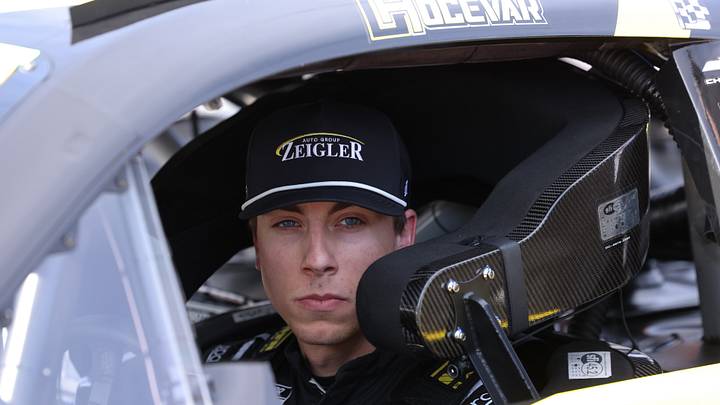
It's perhaps only fitting, given how the story of the 2026 NASCAR Cup Series season has unfolded, that on the week the championship is going to be decided, here we are talking about Carson Hocevar.
After brake-checking Austin Cindric multiple times last weekend at Martinsville Speedway, Spire Motorsports has suspended its star driver for the season finale at Homestead-Miami Speedway while placing Justin Haley in the No. 77 Chevrolet. It's the culmination of consequences from a series of recent incidents, and it's hard to argue with the decision.
And where Hocevar is concerned, it's going to need to offer a critical reality check.
Carson Hocevar is popular for a reason, and it's not for using his car as a weapon
In only his third full-time Cup Series season, Hocevar has already become somewhat of a tragic figure. His fall from grace in the public eye has been just as quick as his meteoric rise to popularity, which seemed to peak when he earned his first career win at Talladega Superspeedway back in April and gave us a celebration for the ages.
Many believe Hocevar is the heir to Chase Elliott's throne as NASCAR's Most Popular Driver, following a likely one-year posthumous interlude from Kyle Busch this year. But he's also made his share of enemies on the track, and the way he's handled his confrontations has turned much of the fanbase against him.
If there's any saving grace, it's that Hocevar is still only 23. He has a lot of growing up to do, and perhaps his best path forward is a reminder of what makes him so special in the first place.
Hocevar first endeared himself to fans because he was just a guy who loved to race. He didn't come from huge corporate backing and he worked his way up through the ranks driving for smaller teams. He wore his passion for the sport on his sleeve, and his fearless driving style made him must-see TV, even if it bent a few fenders in the process.
In today's world of neutered PR spokesmen, he was the ultimate breath of fresh air. He was compared to a young Dale Earnhardt or a Busch brother, and it's easy to see why. He had the talent and charisma to be a superstar, and he always made time for the fans.
But something about Hocevar has changed in recent months. He heard all the talk about how he was the personality NASCAR needed, and he started leaning into it. He turned his feuds into merchandise opportunities. He used his moments in front of a camera for clicks and giggles. He became less of a true character and more of a parody of himself, a guy playing an act on TV.
Somewhere along the way, the idea was planted in Hocevar's mind that he could do no wrong. He was told he was the savior of NASCAR and he believed it. No one would ever hold him accountable for his controversies because of how critical his success was to the growth of the sport.
It's quite telling that Hocevar's suspension is coming not from NASCAR, but from Spire. And it might be better that it happens this way. It sends the message directly from his employer that he is not above the law, and that if his actions continue, there will be consequences.
Hocevar can still be everything that makes him Carson Hocevar. The sport is more entertaining with him in it, and he has the potential to accomplish so many great things. But he can be all of that without crossing the line, and on Sunday, he crossed a line.
NASCAR needs Hocevar to be the guy who wears funny hats and sings 1980s pop hits on his radio and interacts with fans on social media. Not the guy who uses his car as a deliberate weapon on the track and exaggerates his image for extra attention. By trying too hard to commit to the bit, he's making his own life much more difficult than it needs to be.
Hocevar is already hugely popular just for being himself. And after this humbling message, that's what he needs to go back to being.
 Add us as a preferred source on Google